


Hey there 👋 I’m Lavinia, and each Sunday I write about modern ways of running L&D. If you want to learn more: Offbeat Fellowship | Offbeat Sparks | Offbeat Fest. Here are my favorite L&D people to follow, a list of L&D books you might want to check out, and a list of L&D conferences all around the world.
A few months ago, we had Ajay Jacob, Founder of Tell More Stories, as a guest speaker in our Offbeat Fellowship to explore the intersection of storytelling and L&D. As a follow-up, I wrote this newsletter, but I felt there’s more that needs to be told. So I invited him to write more of his thoughts for this edition. So I’ll leave you in Ajay’s company to explore why L&D gave up on storytelling as a learning method, and how to reclaim it.
Here’s a familiar story unfolding in organizations every day. It might play out in slightly different ways, but the script is roughly the same.
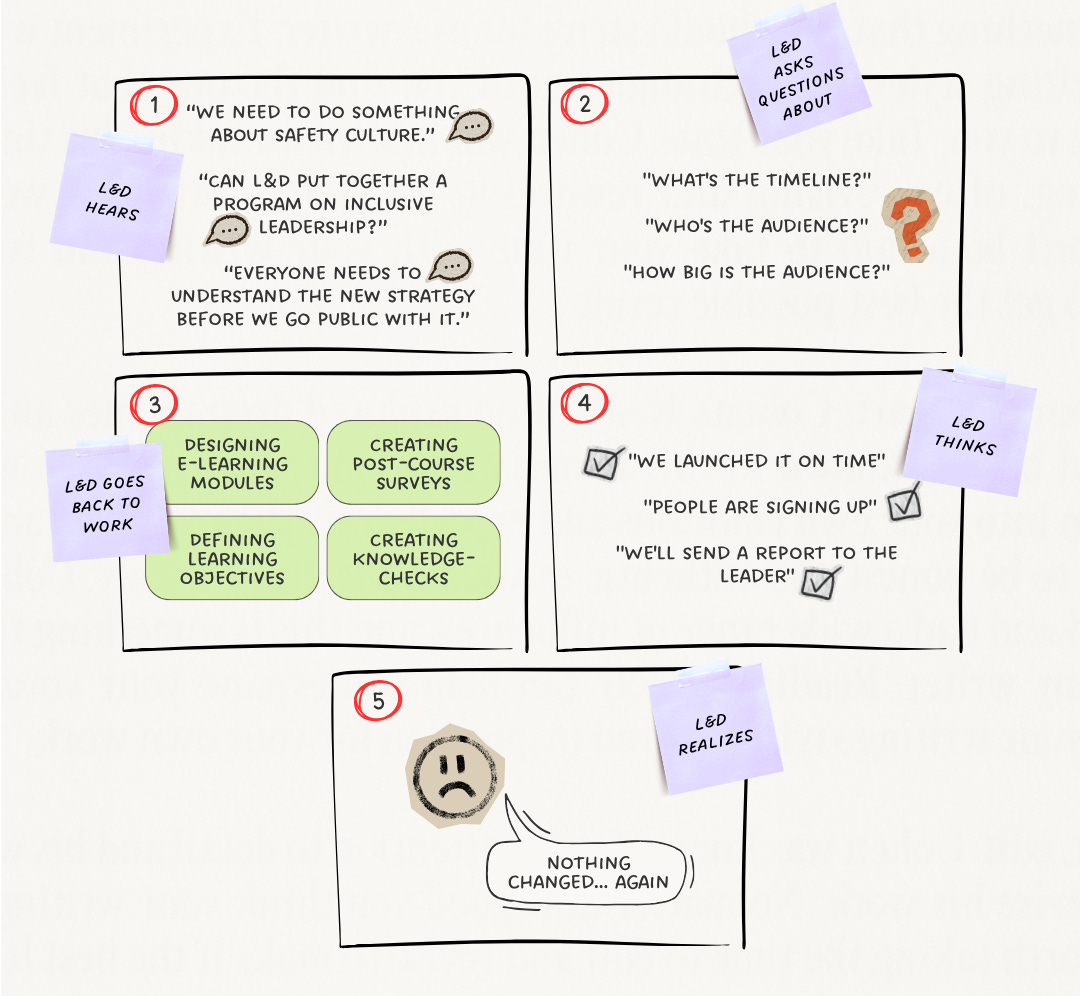
A senior leader leans back in their chair and says something like: “We need to do something about safety culture,” or “Can L&D put together a program on inclusive leadership?” or “Everyone needs to understand the new strategy before we go public with it.”
The learning professional in the room nods. They might ask some sensible questions about timeline and audience size. And then they go back to their desk with that familiar mix of professional purpose and quiet dread, because somewhere between this meeting room scene and their laptop screen, the request has already started to ferment into something they recognize all too well.
e-learning Modules. Learning objectives. Knowledge checks. A post-course survey asking participants to rate the training on a scale of one to five. All the same things we’ve been creating for years, except now it’s even faster because...AI.
They’ll complete it because they’re good at what they do.
They’ll launch it on time.
The LMS will register completions.
The leader will receive a report; maybe even a nice-looking dashboard.
And almost nothing will change.
This might sound like an overtly cynical take, but if we are being honest with ourselves, it’s been the lived reality of most of us in L&D. We know, somewhere in our professional gut, that much of what we produce doesn’t work as well as it should. We also know that learning can be extraordinary, that it can shift perspectives, change behaviour, transform teams, because we’ve seen it happen. We’ve sat in rooms that crackled with energy. We’ve witnessed the moment someone’s face lights up because they’ve understood something they hadn’t before. We’ve seen a story told in a workshop so well that people reference it months later like it happened to them personally.
We know the difference between learning that leads to performance and learning that’s purely performative. We just haven’t always known what that difference is.
I’d like to suggest that the difference, almost always, is Story.
But before we can embrace that idea, really embrace it, practically and professionally, we need to understand how we ended up so far from it. Because we didn’t abandon narrative by accident. We abandoned it deliberately, in pursuit of something we thought we needed more: credibility.
The Abandoning of Narrative
Here’s a little thought experiment. Think of the most powerful learning experience you ever had. Not the best-designed course or the most comprehensive training program, but the most powerful experience of genuine learning. The kind that changed how you thought, or who you were, or how you showed up in the world.
Got it?
Now ask yourself: was it a module? Was it a series of learning objectives? Was it a knowledge check at the end of a slide deck?
Unlikely, right? It was probably a deep conversation or a mentor’s story. Maybe a book that cracked something inside you, or a failure that taught you something you couldn’t unlearn. It was almost certainly a narrative experience. Which makes it all the more remarkable that the people most responsible for creating learning experiences have moved so decisively away from narrative as their primary medium. And now, in the age of AI, if we’re not careful, we’re set to drift even further.
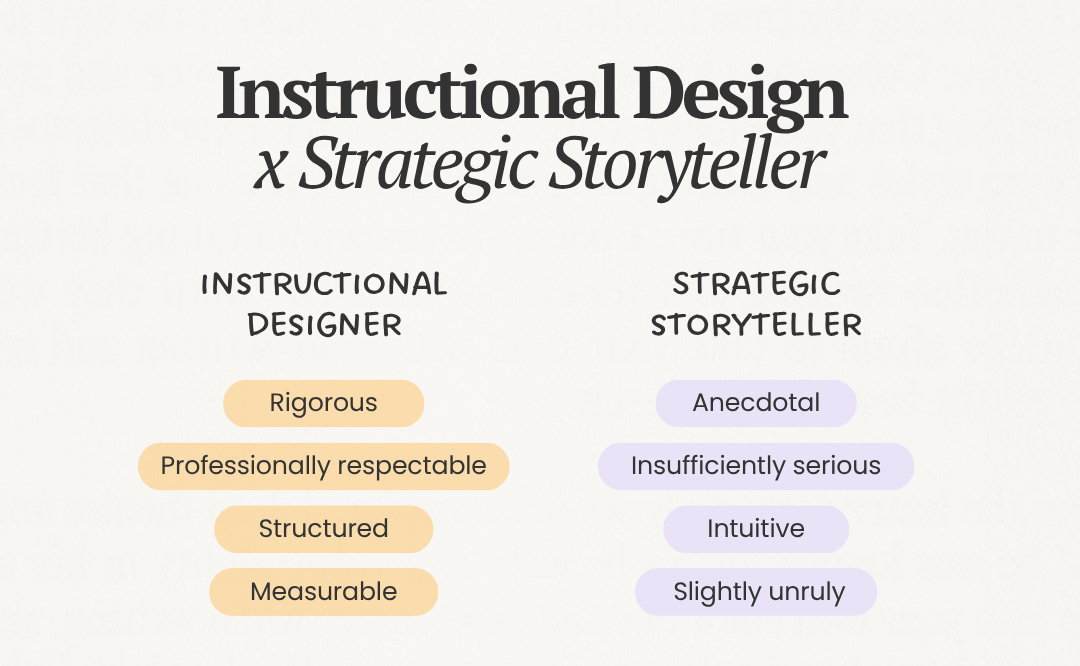
This didn’t happen because L&D professionals don’t value stories. Most of us love stories. It happened because stories felt insufficiently serious for the professional context in which we found ourselves. The trajectory is understandable. From around the 1970s onwards, Instructional Design emerged as a discipline with its own models, like ADDIE, Bloom’s, and Kirkpatrick. HR and training functions sought to be on par with finance, operations, and marketing. We adopted business language and frameworks.
In doing so, we traded the intuitive, slightly unruly world of narrative for the structured, measurable, professionally respectable world of ID. Narrative felt anecdotal while instructional design felt rigorous. So we pushed story to the margins where it remained as an occasional icebreaker technique, a facilitator’s way of warming up a room or an illustration you might use to break up a content-heavy slide. We kept the anecdote while abandoning the architecture.
And in our rush to be taken seriously, we forgot something essential about human learning. That it is fundamentally narrative in structure. Not because someone made an argument for it, but because that’s how the brain works. Stories aren’t decorative. They’re not a delivery mechanism for learning. They *are* the learning, the medium through which the human brain encodes, structures, and retrieves experience. Every culture in history has transmitted knowledge through story for the simple reason that story was, and remains, the most effective learning technology humans have had.
The good news is that what we abandoned, we can reclaim. And the evidence that we should is now overwhelming.
The case for the Strategic Storyteller
Ask any L&D professional what frustrates them most about their role, and the answer you’ll hear most often isn’t budget or tools or even time. It’s about the perception of being order-takers and how most L&D functions are *still* stuck in it. L&D builds what it’s asked to build. It’s evaluated on delivery, therefore optimizes for it, and ends up doing more of the same.
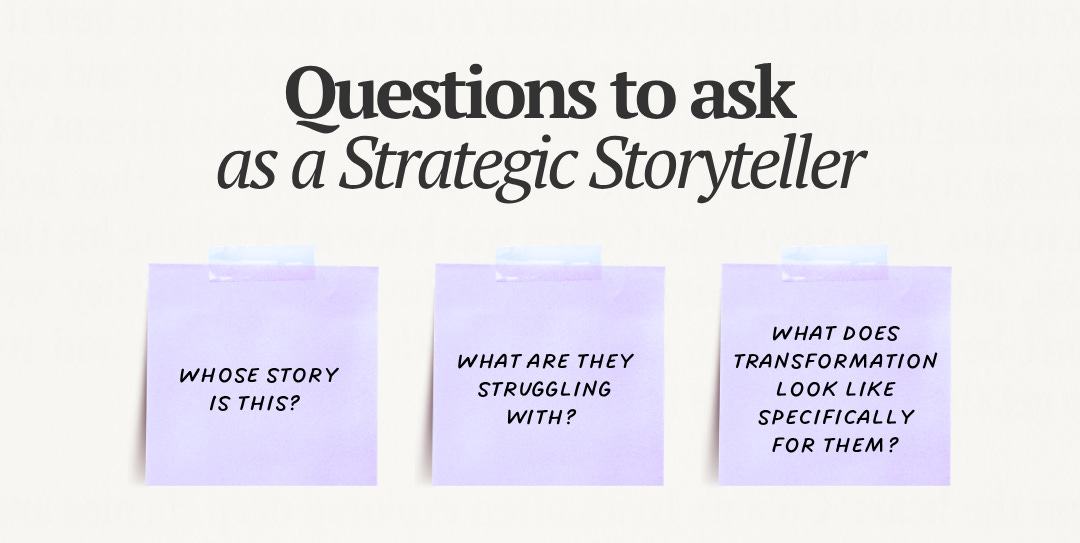
The strategic storyteller operates from a completely different starting point. Rather than asking “What does this training need to cover?” and translating a list of learning objectives into content, they ask “Whose story is this? What are they struggling with? What does transformation look like specifically for them?”
The shift from content developer to narrative designer is not a soft upgrade. It’s a fundamental reimagining of what L&D is for. It repositions the learning professional from someone who serves requests to someone who shapes thinking.
Order taker to Meaning maker
Despite AI, the work of the Strategic Storyteller requires something that remains fundamentally human: the ability to identify the meaningful story within a body of experience, to tell it in a way that lands both emotionally and intellectually, and to create the conditions in which others feel safe enough to share their own.
Far from being a ‘soft’ skill, this might be the hardest and most valuable skill in the L&D professional’s repertoire. It requires emotional intelligence, contextual sensitivity, deep listening, and the particular human capacity for empathy that allows one person to inhabit another’s perspective well enough to create genuine understanding.
What AI gives L&D is, in some ways, a gift. A shimmering lining of silver amidst the dark clouds of uncertainty. By automating the content production tasks that have absorbed so much of our time and energy, it frees us to do what no algorithm can: be the humans in the room, asking the story questions, listening for the narrative truth, and designing learning experiences that move people rather than merely inform them.
So, to conclude, here are THREE ways to start building a Storytelling Capability.
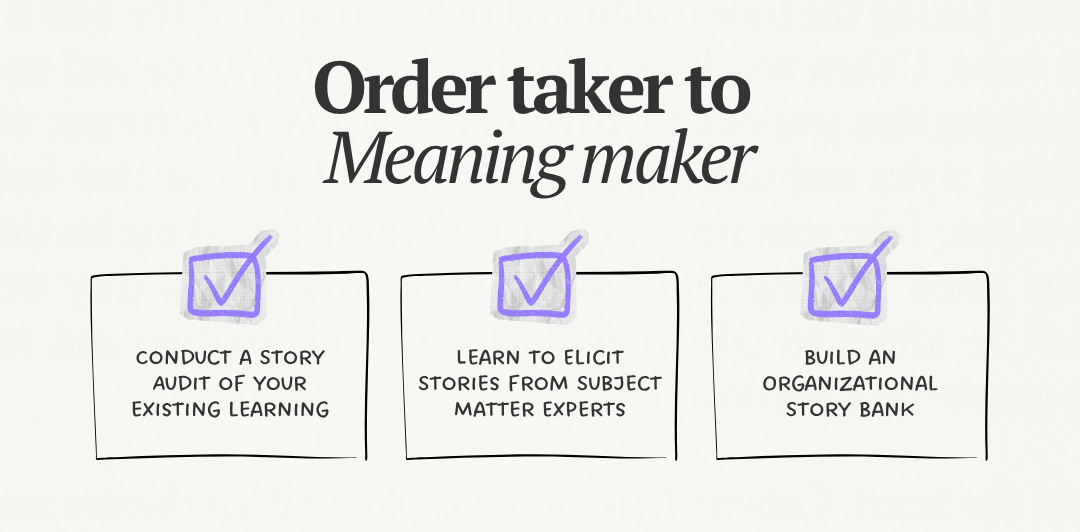
1. Conduct a Story Audit of your existing learning
Before designing anything new, look at what you already have through a narrative lens. Take your five most-used learning resources and ask of each:
– Where is the human in this?
– Is there a character facing a real challenge?
– Is there a moment of consequence?
– Would I remember this in a week?
2. Learn to Elicit Stories from Subject Matter Experts
SMEs think in information. Your job is to help them think in narrative. Most SMEs will tell you what they know about the process, the regulation, or the best practice. Your job is to ask them when they knew it. In other words, the moment it became real for them.
A simple set of questions transforms an information download into a story conversation:
– “Tell me about a time when this went wrong. What happened?”
– “Can you remember who really understood this, and what did they do differently?”
– “What’s the mistake you see people make most often, and what does that cost them?”
3. Build an Organizational Story Bank
Every organization has them: stories of customer breakthroughs, near-misses, cultural turning points, unlikely successes, and hard-won lessons. Start documenting these. It doesn’t need to be sophisticated. A shared document or folder will do initially. What matters is the habit of collection so that you have a set of real stories that’s more credible, more specific, and more likely to drive the recognition that makes your next learning stick.
When you start to do these things, you become someone who listens for the narratives that illuminate how things work and why they matter. Someone who translates strategy into human experience and creates the conditions in which people feel things about their work. Because when people feel things, they are more likely to remember and act differently.
The most powerful learning experiences your learners will ever have are stories.
It’s time we started telling them.
3 L&D Resources Worth Exploring
Squiggly Careers Skills Profiler. Squiggly Careers are full of change and uncertainty, potential and possibilities. In this profile, you’ll explore 5 skills that will support you to create opportunities and design a career as individual as you are. When you complete the profile, you’ll get a snapshot of your skills today, including your Squiggly Super Skill, and your gap for growth. You’ll also get a personalised report packed with practical actions and free tools to help you learn and grow.
The key to AI value is hiding in plain sight: Your operating model. Almost every organization has an AI strategy by now, but how many have changed the way work actually gets done? McKinsey surveyed over 700 leaders and found that the 13% redesigning roles and workflows around AI, rather than just handing out tools, report stronger results on every measure. For L&D, the most relevant part is talent. Their advice is to break the work that matters into tasks, build skills around those tasks, and keep reassessing as workflows change, instead of reskilling people against static job descriptions. Useful if you’re making the case for skills-based development.
How well does L&D really measure impact? Most L&D teams know measurement matters. Far fewer know where they actually stand. This survey maps your practice across mindset, stakeholders, strategy, and impact, and shows you where you land on a four-level maturity model, alongside how everyone else answered. Fill it in by November 15th!
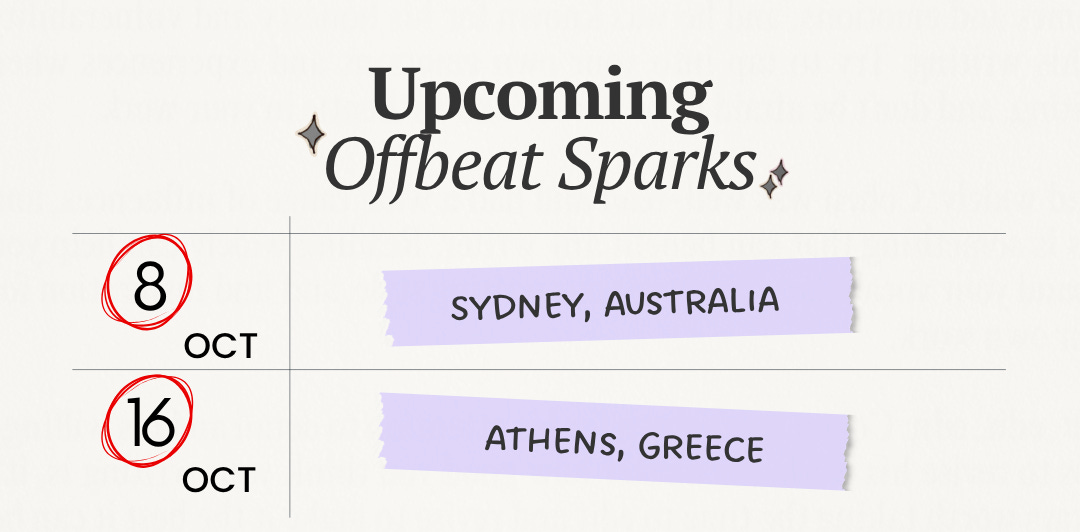
Meet L&D peers in your city
Live events all around the world, made to facilitate networking and exchange ideas that inform, inspire, and innovate the future of learning. Wanna bring Offbeat Sparks to your city? Click here.
The AI Find: The “-TIONS” of AI in L&D
I mentioned last week that I will be sharing some ideas here from Maven’s The AI-Native L&D Leader series. Last week I spoke about Nick Shackleton-Jones’s session, and how AI can be used in different ways throughout the human-centered design process he calls the 5Dis.
This week I want to talk about Lori Niles-Hofmann’s session called How to Transform into a Course-Less AI Learning Function. What I really loved about it is that it gave me a pretty good overview of how AI can support L&D teams in delivering better digital learning experiences.
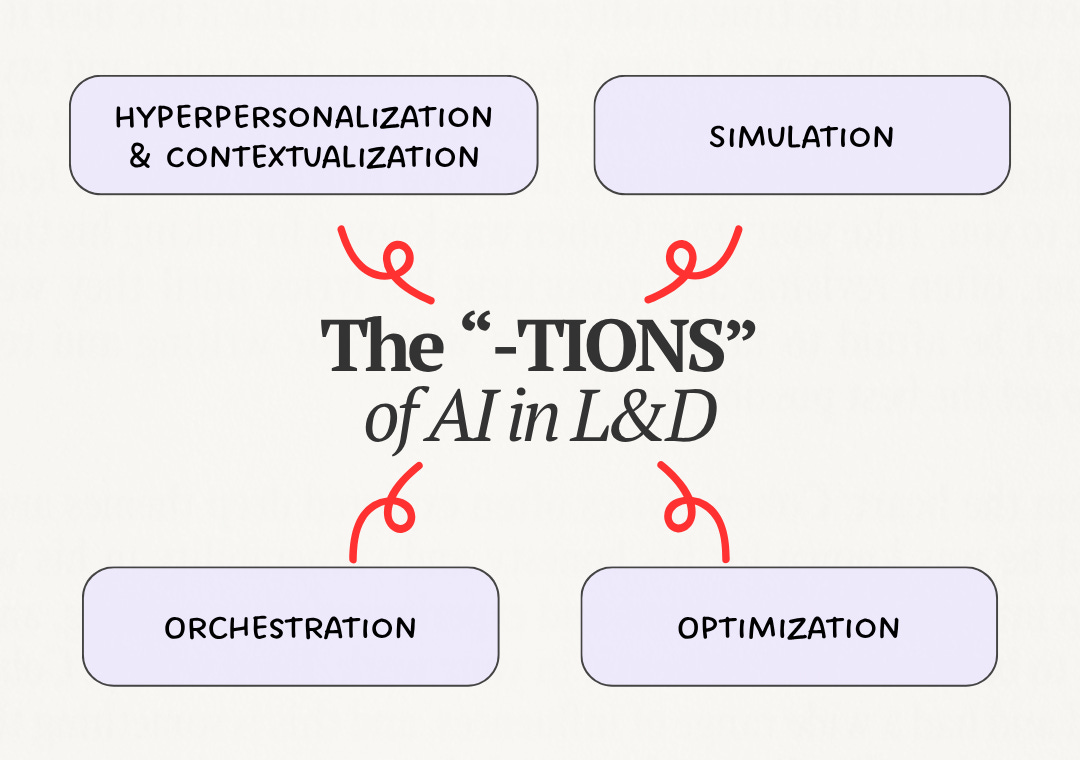
Hyperpersonalization & Contextualization
For years, personalization meant letting people pick their own path through a catalogue. What Lori is describing is different. Imagine an AI that’s connected to systems such as Slack, Notion, your CRM, and the HR platform, so it already knows who you are and what you’re working on. The support you get isn’t a general course, but help with specific tasks. In this case, our role shifts from producing content to stewarding the context the AI can draw on (keeping documentation updated, deciding how the tutor replies, among others).
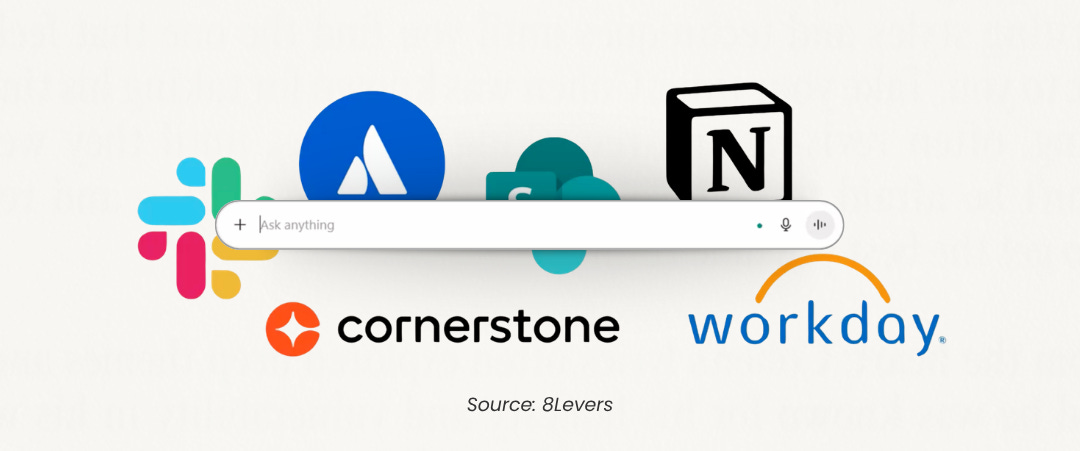
I would add two notes here. The first one is about data privacy, and Lori herself mentioned this should absolutely be a concern. The second one is that, as I see it, this AI tool looks more like a performance tool than a learning tool. Once it’s done its job, it doesn’t mean the human can act on their own the next time the same task comes up. I think this is a larger conversation about what an AI team is becoming, and it’s one we should have.
Simulation
The example Lori gave here was very interesting because it expanded way beyond a general simulation tutor. She spoke about a sales rep, let’s call her Kasia, who has a prospect meeting this Friday and needs to prepare. The AI tutor would pull context from the prospect’s profile in the CRM, cross-reference successful interactions with this persona, identify the specific conversation techniques that land with this type of buyer, review Kasia’s call recordings, scores, and patterns, and create a personalized simulation so she can practice the interaction. Our role here could be to decide where practice is even required, and what counts as good performance.
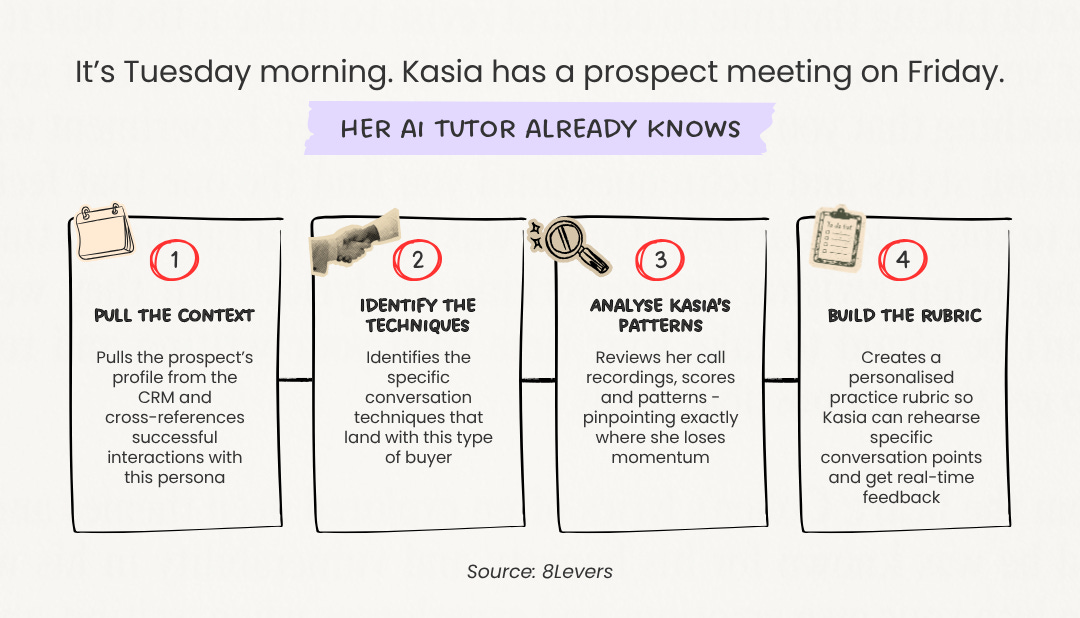
A caveat here is exactly what we set as standards of good performance. In the real world, those standards might shift as the world evolves. So making sure those standards are kept up to date as well might be an important task.
Orchestration
This is the piece I keep coming back to. Imagine again, an example Lori shared. Someone finishes Level 4 Spanish on the LMS. Next time they open Excel, it offers to switch their language settings. That signal goes to the talent marketplace, which matches them to a project with South American clients. Nobody designed a learning experience. A chain of small nudges got fired across systems that already exist. We have known since the 1980s that the work environment predicts whether training sticks. We have almost never been able to do anything about it, because we had no access to the work environment. Now we do.
In this case, our responsibility is knowing which systems talk to each other, what triggers what, and where in someone’s week a nudge helps rather than irritates.
Optimization
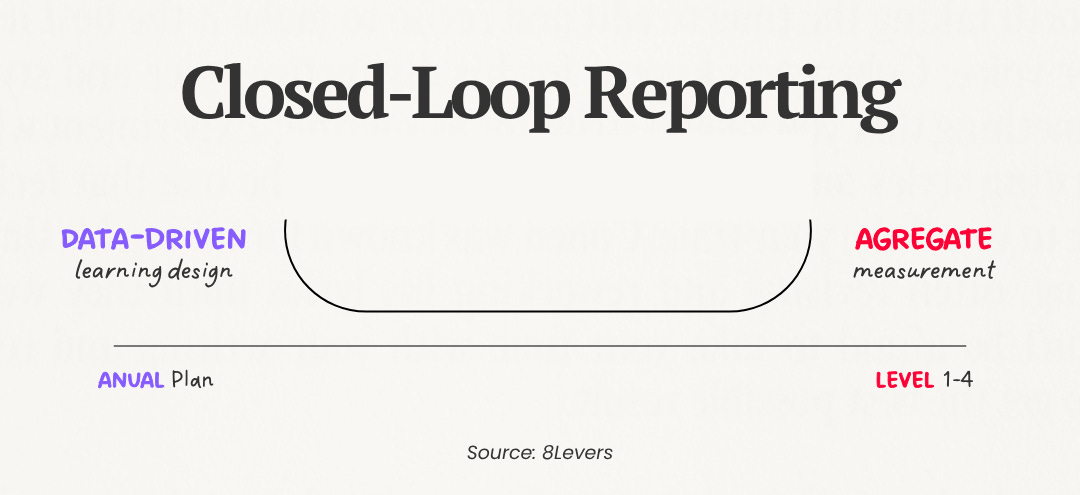
This is related to our favorite topic in L&D, measurement. If we are to build all these digital learning products and have access to the data behind their usage, and ideally also to additional business data, we could finally be able to find patterns, correlations, and all those sweet links between learning, performance, and business results that we’ve been looking for.
There’s so much data we consider private in all these use cases; I feel the need to reiterate that this is a future that won’t be easy to build. I’m honestly not even sure it’s what we should be building. Even so, I totally agree these are conversations worth having in any L&D team.
Surprise of the week
Each week, Offbeat brings you a new random surprise. Sometimes it might be big - a challenge you can join to win something nice. And sometimes it might be small, like a video or a nice Instagram account. Curious? Hit open!

