


Hey there 👋 I’m Lavinia, and each Sunday I write about modern ways of running L&D. Here’s what you can find in this newsletter: how Mark Dearlove would rewire L&D, 5 L&D resources worth exploring, our surprise of the week, and my thoughts on why L&D teams fail. Enjoy! 💜
How would you rewire L&D?
Every week, we ask a community member the same question: “How would they rewire L&D?”
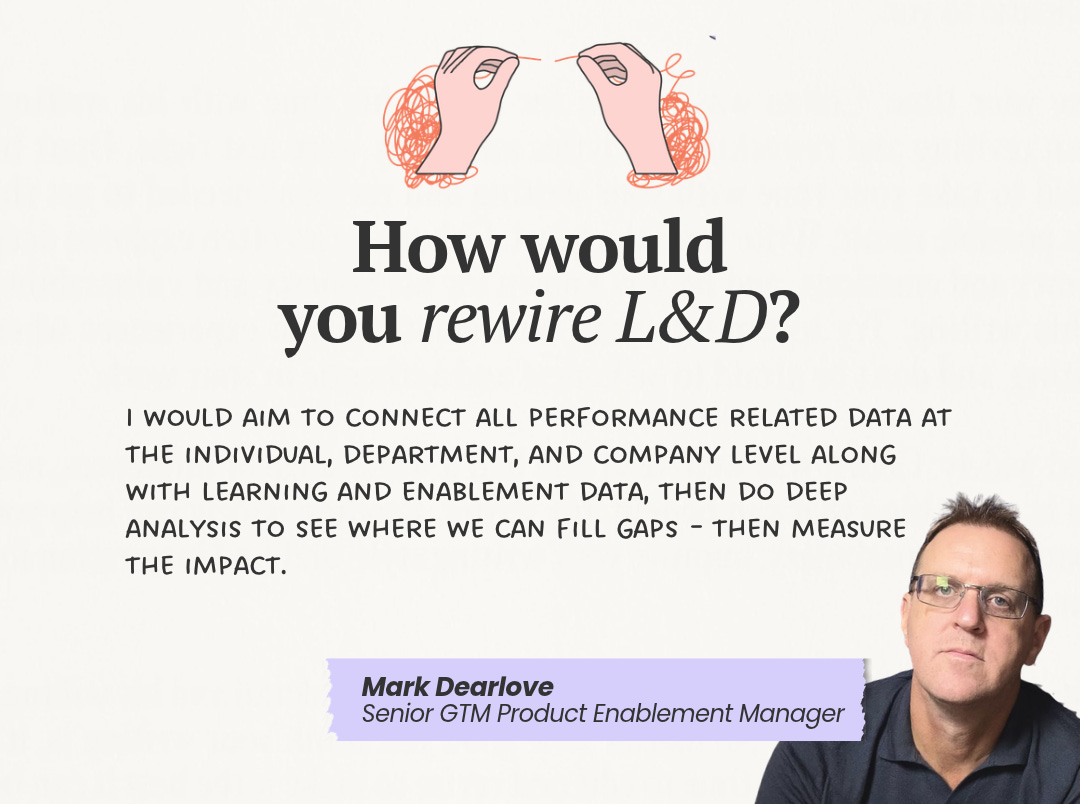
This week, Mark Dearlove says, “I would aim to connect all performance-related data at the individual, department, and company level along with learning and enablement data, then do deep analysis to see where we can fill gaps - then measure the impact.”
Wanna contribute? Share your answer here. Interested in how I would rewire L&D? Get your copy of L&D Rewired.
5 L&D Resources Worth Exploring
The Frictionless Learning Trap. There’s a difference between using AI to help you learn and using AI in a way that means you don’t have to learn at all. The authors at PeopleStorming explore how mistakes and mismatched expectations help our brains update their understanding and develop new skills. When AI smooths away every obstacle and delivers a polished answer, we may be saving time at the expense of learning. They offer practical ways to keep the thinking process alive: use AI to plan research but do the research yourself, ask it to challenge your assumptions, or sketch out your ideas before turning to a computer. The goal isn’t to avoid AI, but to be more deliberate about what we let it do for us.
The bleeding edge of L&D in late 2026. Most L&D teams are using AI to create courses faster. But the most innovative teams are doing something quite different: they’re changing the nature of the L&D role itself. Dr Philippa Hardman explores how a small group of pioneering teams are moving from producing content to directing AI. Their focus is shifting towards identifying what’s worth building, defining quality standards, checking AI’s output and measuring whether learning actually changes behaviour. She also shares three practical steps to start making that shift. A compelling look at where L&D roles may be heading and why our value increasingly lies in knowing what good looks like, rather than simply knowing how to build it.
5 life-changing books. What does it mean to become richer on the inside? In this article, Darius Foroux recommends five books that have helped him think more clearly, manage his expectations, and develop a better relationship with himself. The themes range from stillness and Stoicism to writing as a tool for thinking, finding fulfilment in your own company, and letting go of the expectation that life must go exactly as planned. These aren’t just books to add to a reading list. They’re invitations to question how you think, what you expect, and how you choose to live.
What Bad Leadership Can Teach Good Leaders. Some of the most valuable leadership lessons come from the worst leaders we’ve worked for. Why? Because poor leadership makes the damage visible. The manager who hoards information teaches you the value of transparency. The one who punishes bad news shows you why people need to feel safe speaking up. This Field Note from Admired Leadership explores how difficult experiences with bad role models can shape a better approach to leading others. A useful reminder: pay attention to the behaviours that frustrate or diminish people. They may reveal exactly the kind of leader you don’t want to become.
The Manager Capability & Support Effectiveness Checklist. How confident are you that your organisation is developing capable managers, and how do you know? Vokser’s free Manager Support Checklist offers a structured way for HR and L&D teams to review their approach. Across six sections, it looks at manager capability, the support available, the quality and timing of that support, and the role of AI. The 20-minute exercise gives you two scores: how well you understand your managers’ capabilities, and how effective your support is. It then brings these together into an organisational profile and suggested next steps. You can complete it individually, with your team, or use it to kick off a wider review of management development.
Quick Sponsor Break
This issue is sponsored by our friends at Guideless. When a new CRM or HR system rolls out, L&D often gets asked for “some quick guides” a week before go-live. Guideless is built for that week. Click through each workflow once and get a narrated video guide and a written doc you can share the same day, in your company’s branding.

The two reasons why L&D teams fail
There are two ✌🏻 major reasons why L&D is not impactful.
On one hand, you have the capabilities of the L&D team.
On the other hand, you have the maturity of the organizational culture.
What do I mean by the capabilities of the L&D team? I don’t mean just the skills. From my own (still limited) understanding, a capability is a combination of skills, processes, and technology. So on a large scale, your L&D team might be more or less equipped.
What do I mean by the maturity of the organizational culture? I mean the degree to which the organization prioritizes learning, promotes psychological safety, has in place recognition & reward systems for behaviors associated with learning, supports transparency and knowledge sharing, and dedicates resources to learning initiatives. Again, on a spectrum, your organization might be more or less prepared to support learning.
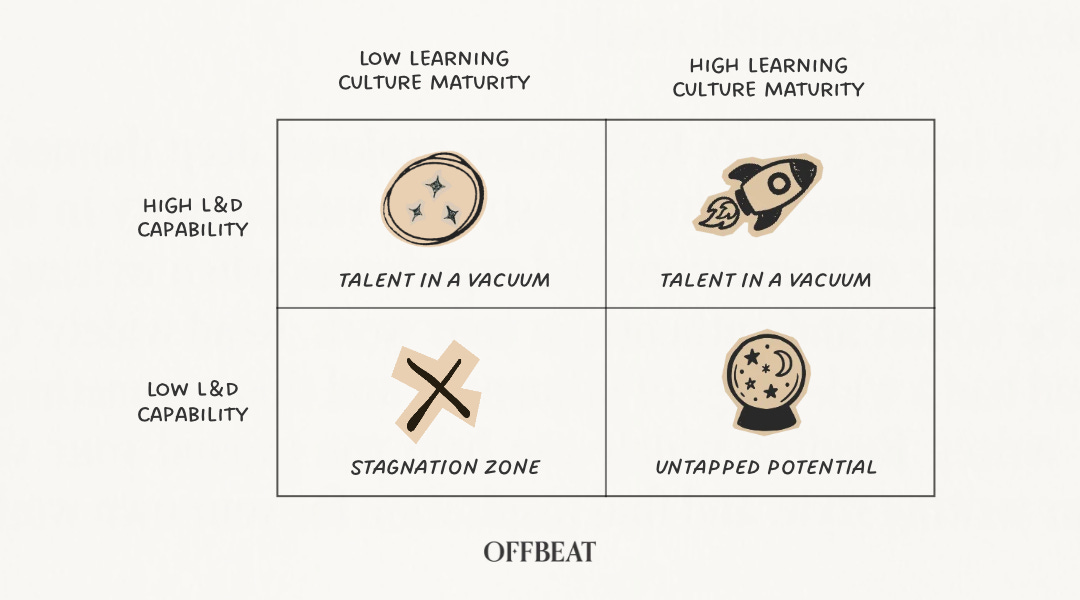
So, if we are to simplify things, you will find yourself in one of 4 scenarios.
Learning powerhouse (High L&D Capability, High Learning Culture Maturity)
This is the dream scenario—the happy, happy, joy, joy quadrant. Few L&D teams operate in a true learning powerhouse, but when they do, the impact is undeniable. The L&D team is highly skilled and equipped with the right tools and processes, and the organization values and supports learning at every level. In this environment, learning drives innovation, employee engagement, and business success.
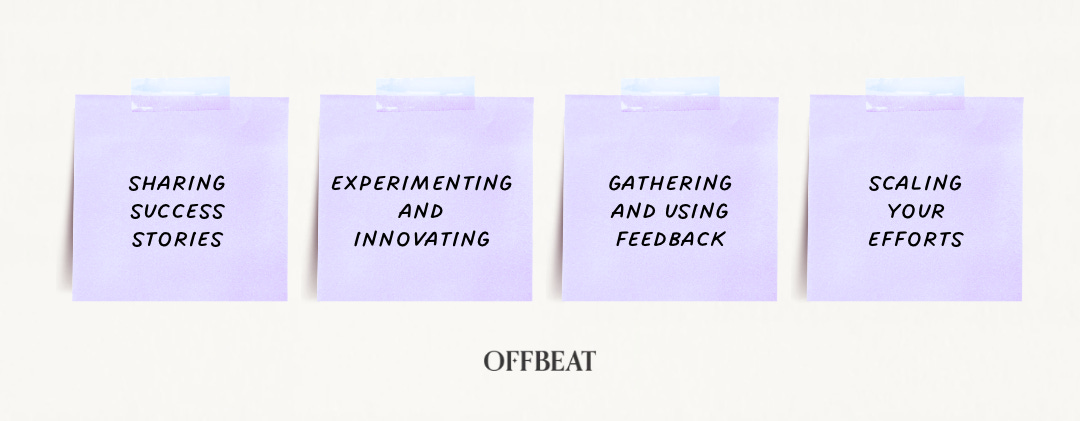
However, even in this scenario, maintaining momentum and continually evolving is critical. To stay at the top, L&D teams should focus on:
- Sharing success stories: Regularly communicate the impact of your initiatives to internal and external stakeholders to reinforce the value of learning.
- Experimenting and innovating: Continuously test new tools, methodologies, and approaches to learning. Keep your programs fresh and relevant.
- Gathering and using feedback: Use both qualitative and quantitative feedback to refine your strategies and programs. Stay aligned with evolving business goals and learner needs.
- Scaling your efforts: Identify areas where your successful initiatives can be expanded or adapted to reach more people or solve broader challenges.
By remaining proactive, you’ll not only sustain the powerhouse status but also future-proof your L&D team against changing organizational needs and external trends.
Talent in a Vacuum (High L&D Capability, Low Learning Culture Maturity)
This scenario often arises in the wake of organizational transformation. A new CEO or C-level leadership team may bring a bold vision and hire skilled L&D professionals to drive change. While leadership support is present, the broader culture may lag behind, with limited awareness of learning’s value and resistance to change.
In other cases, this scenario is all too familiar to L&D professionals who have experienced years of operating in a traditional, rigid environment. Here, L&D teams often feel they’re ahead of the culture they live in—frustrated by the lack of support, the focus on urgency over quality, and leaders who fail to model learning behavior.
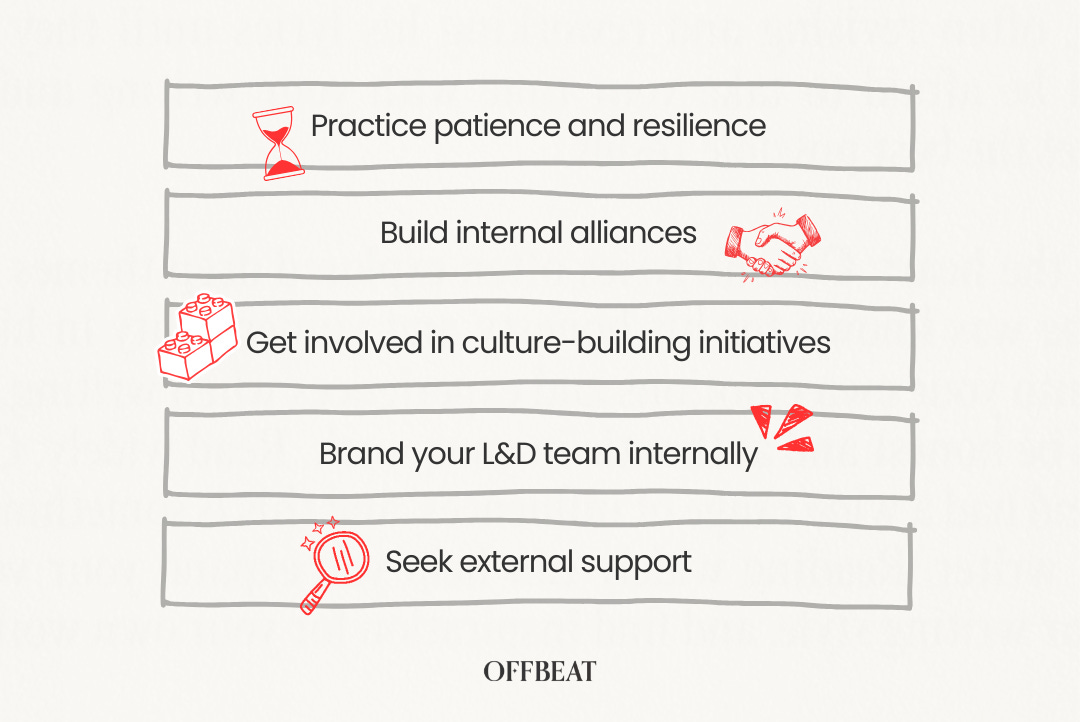
To navigate this challenging situation, L&D teams should:
- Practice patience and resilience: Cultural shifts take time. Recognize that change is a marathon, not a sprint.
- Build internal alliances: Find your internal “tribe” of sponsors and advocates who share your vision for learning and can help you amplify your efforts.
- Get involved in culture-building initiatives: Use your expertise to contribute to organizational efforts that promote transparency, knowledge-sharing, and psychological safety.
- Brand your L&D team internally: Position L&D as a strategic partner by highlighting its contributions to organizational goals and success stories.
- Seek external support: Connect with peers outside your organization to exchange ideas, find encouragement, and recharge your energy for the journey ahead.
While progress will be slow and often frustrating, persistence combined with strategic partnerships will eventually help you align the organization’s culture with your team’s capabilities.
Untapped Potential (Low L&D Capability, High Learning Culture Maturity)
This is a scenario filled with hope and opportunity. Your organization values learning and is ready to invest in it—it promotes transparency, psychological safety, and has strong recognition systems in place. Employees and leaders are eager to develop, share knowledge, and grow. However, the L&D team isn’t yet equipped to meet the high expectations of such a culture.
In this case, the first step is for the L&D team to focus on its own growth. Without investing in their own capabilities, they won’t be able to harness the organization’s readiness for learning or meet the needs of eager learners.
Once the team starts to grow, the focus should shift to tapping into the organization’s cultural strengths:
- Build a network of allies: Work closely with employees and leaders who are already engaged and willing to champion learning initiatives.
- Start experimenting: Pilot small programs or experiments to build momentum and confidence within the organization.
- Co-create learning initiatives: Take advantage of the existing appetite for learning to co-create solutions and demonstrate quick wins that align with organizational goals.
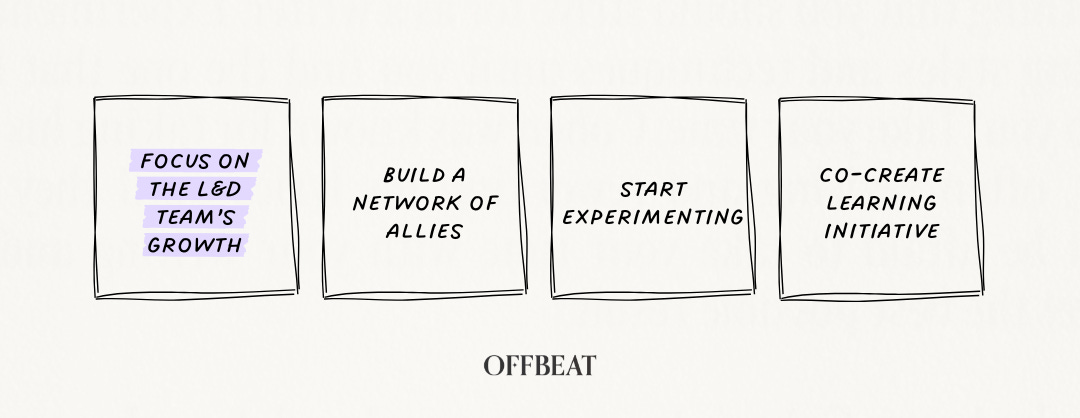
By focusing on collaboration and leveraging the supportive culture, the L&D team can quickly create a positive impact while continuing to grow alongside the organization.
Stagnation Zone (Low L&D Capability, Low Learning Culture Maturity)
This is the toughest place to be. The organization doesn’t prioritize learning, and the L&D team isn’t equipped to lead the change. Learning initiatives, if they exist at all, are often seen as a checkbox exercise with little impact. Employees may not feel safe engaging in development, and leaders may not see learning as a priority.
Here, the first step is still for the L&D team to focus on its own growth. Without the ability to lead by example and advocate for change, it’s nearly impossible to shift a culture that doesn’t prioritize learning.
As the team begins to grow, the next focus should be on finding small ways to create momentum:
- Target specific challenges: Identify one or two critical pain points that resonate with business priorities and address them with targeted solutions.
- Build a network of allies: Build relationships with champions or allies, even if they are few and far between, to advocate for the importance of learning.
- Communicate success stories: Use any visible successes to demonstrate the potential impact of learning and start building credibility.
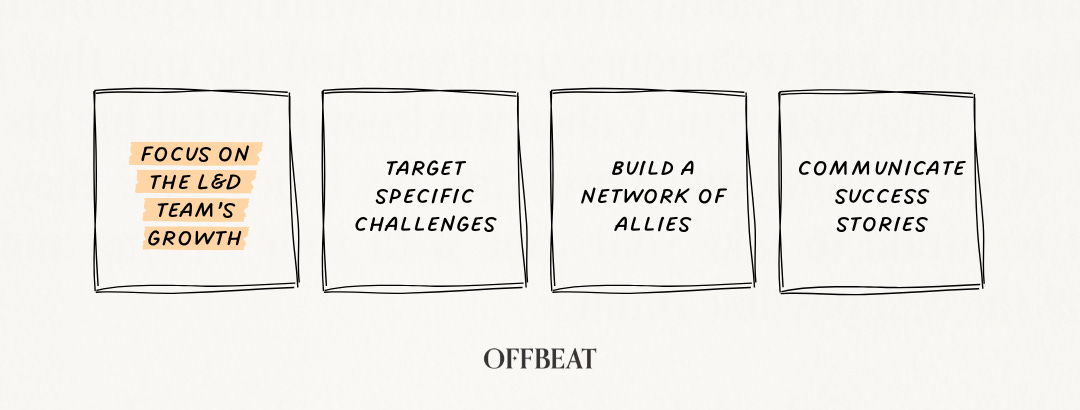
Progress will be slow, and patience will be critical. In this scenario, the L&D team’s growth is not just an internal effort but a signal to the organization that learning can be a strategic enabler. By focusing on incremental wins and building trust, the team can begin to create the conditions for a more supportive culture over time.
How do you know where you stand?
To figure out where your organization falls on the matrix, it’s important to assess both areas: the maturity of your learning culture and the capabilities of your L&D team.
Evaluating learning culture maturity
To evaluate your organization’s learning culture, start by looking at key indicators of maturity. These include role modeling by leaders, where managers and executives actively demonstrate a commitment to their own learning and encourage others to do the same.
A mature learning culture also fosters psychological safety, creating an environment where employees feel comfortable taking risks, admitting mistakes, and sharing their growth journeys. Other indicators include recognition and rewards for learning efforts, knowledge sharing across teams and departments, and resource allocation—such as dedicated time, budget, and tools for learning initiatives. These elements work together to create an environment that either supports or stifles learning.
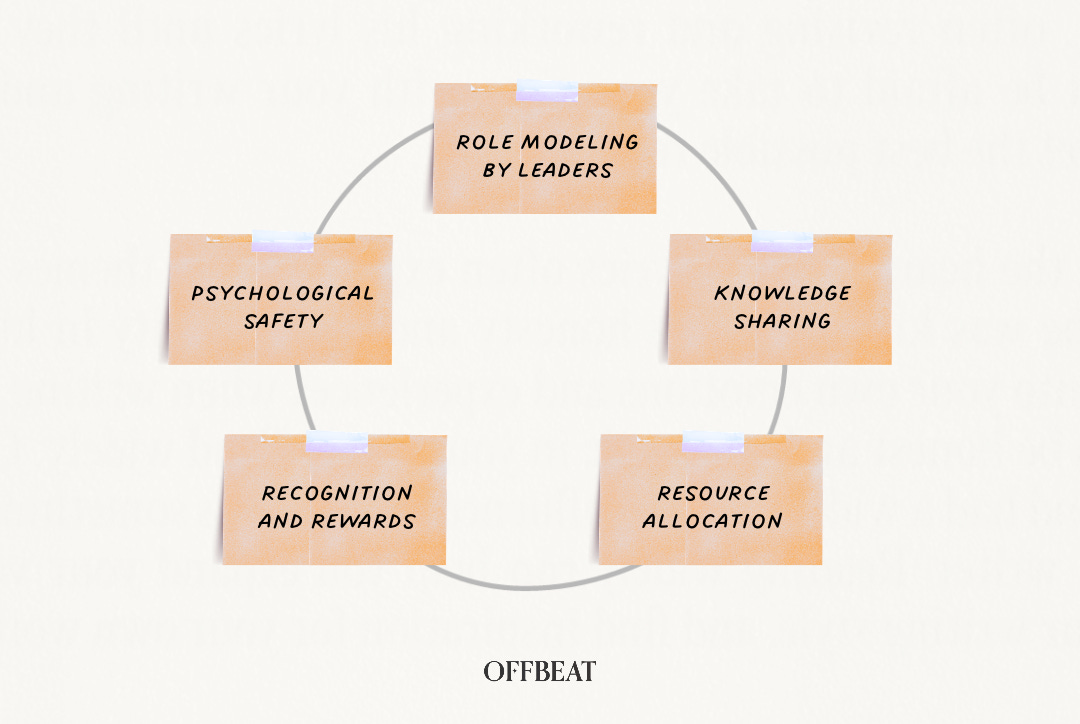
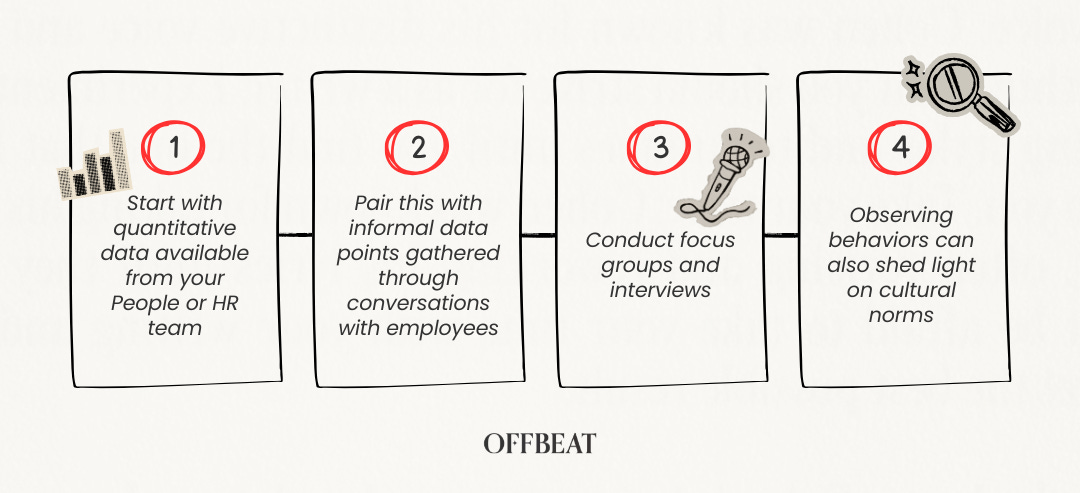
Assessing your organization’s learning culture requires a combination of formal and informal methods.
- Start with quantitative data available from your People or HR team, such as engagement surveys, exit surveys, churn rates, and any metrics related to employee development or satisfaction.
- Pair this with informal data points gathered through conversations with employees, where themes around learning barriers or opportunities often emerge.
- Conducting focus groups and interviews can provide deeper insights into how employees perceive learning opportunities and whether they feel supported in their development.
- Observing behaviors, such as how openly teams share knowledge or how leaders respond to mistakes, can also shed light on cultural norms.
It’s also important to recognize that a learning culture isn’t binary—it’s not a matter of simply having or not having one. Instead, it exists on a spectrum. Your goal is to understand where your organization sits on that spectrum and whether it’s closer to fostering or hindering a culture of learning. This clarity will help you identify which areas need attention and which strengths you can build upon.
Evaluating L&D capability
To understand where your L&D team stands in terms of capability, look at several key dimensions.
- Start with the team’s skills and expertise: do they have the knowledge to design, deliver, and evaluate impactful learning programs? Are they keeping pace with the latest trends and best practices in learning and development?
- Next, examine their processes and strategy. A capable L&D team should have a clear strategy aligned with organizational goals and well-defined processes for needs analysis, program design, delivery, and measuring impact. Technology is another important factor—consider whether the team is effectively using the tools available to them, such as learning management systems, and whether these tools are being leveraged to their full potential.
- Collaboration with stakeholders is also a critical indicator of capability. Evaluate how well the team partners with leadership, managers, and other departments to align learning initiatives with broader business objectives. Do they understand the company’s business model and challenges, and do they use this knowledge to design relevant programs?
- Finally, consider their ability to innovate and adapt. A strong L&D team regularly experiments with new approaches, tools, and technologies and adjusts their strategies based on changing organizational needs and learner feedback.
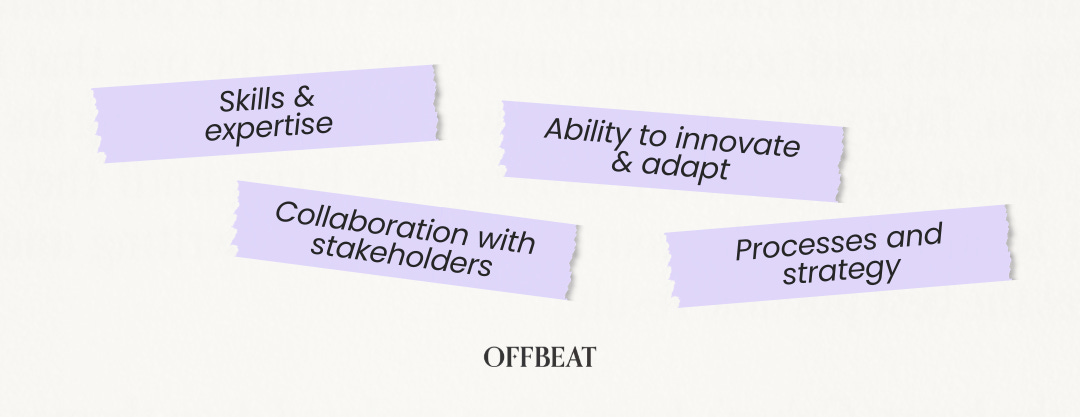
Just like evaluating learning culture, assessing L&D capability is not about a binary yes or no. Capabilities exist on a spectrum, and the goal is to identify where your team excels and where there’s room for growth. Combining this understanding with insights about your organization’s culture will give you a clear picture of where you stand and what steps to take next.
The end of the year and the beginning of a new one provide a natural opportunity to reflect on where your organization and L&D team stand. It’s a time to assess the progress made, identify gaps, and set clear goals for the year ahead. By taking stock of both your learning culture and L&D capabilities now, you can build a solid foundation to drive impactful learning initiatives in the months to come.
Good luck!
Surprise of the week
Each week, Offbeat brings you a new random surprise. Sometimes it might be big - a challenge you can join to win something nice. And sometimes it might be small, like a video or a nice Instagram account. Curious? Hit open!

